

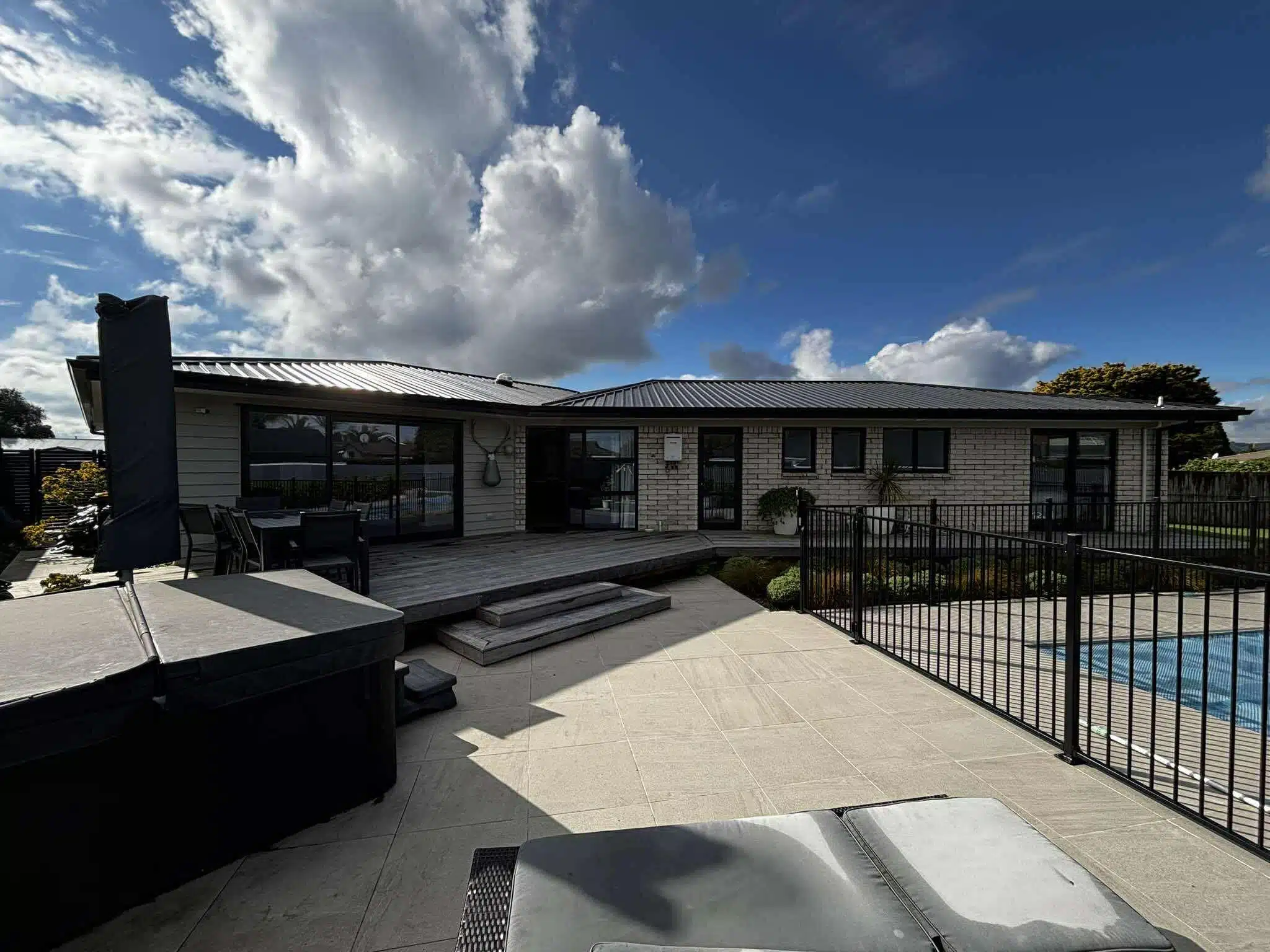
“Should I extend my Franklin home, or am I throwing money away? What do home addition costs actually look like in 2025, and is it worth it compared to moving or rebuilding?”
Most Franklin home additions cost $5,500-$7,800 per m² in 2025 (includes GST). A typical 40m² extension costs about $220,000-$320,000. Total time is usually 4-7 months from consent to completion.
⚠️ All costs include GST unless specifically noted otherwise
Look, we get it. You’re probably sitting there staring at your 80m² home, kids growing out of bedrooms, wondering if you’re about to make a $300,000 mistake. After 13+ years of building in Franklin, we’ve had this exact conversation with hundreds of families who felt overwhelmed by the thought of construction disrupting their lives.
Here’s what excites us about extension projects: watching families go from stressed about the unknown to genuinely excited about their home’s transformation. What starts as “How do we survive this?” becomes “I can’t wait to see what’s next!” when you understand the process and work with people who make construction feel like an adventure rather than an ordeal.
Franklin’s clay soil conditions add $20,000-$50,000 to foundation costs compared to stable ground areas. Most people discover this after they’ve fallen in love with extension plans, not before they start budgeting. That’s why we always start with honest soil cost conversations – because surprises during construction stress everyone out, and we’re here to transform that intimidating unknown into clear, manageable steps.
This guide covers everything from the clay soil challenges we navigate daily in Pukekohe and Waiuku through to celebrating the moment you get your code compliance certificate. For broader extension planning principles, our complete home extension guide provides the foundation, while this article focuses on the real story of what extensions cost, what exciting milestones to expect, and when extending beats rebuilding.
What Affects Franklin Home Addition Costs Most in 2025?
Foundation work drives 60% of cost variations in Franklin additions, with clay soil conditions adding $20,000-$50,000 to typical projects.
After working on hundreds of Franklin extensions, we can tell you the soil under your home will make or break your budget – but it’s also where the real engineering excitement happens. Franklin sits on some of Auckland’s most challenging building grounds. The clay soil that makes our region perfect for farming presents interesting challenges for home extensions, which, when appropriately solved, create rock-solid foundations that will outlast your grandchildren.
When clay gets wet, it expands. When it dries out, it shrinks back. Your extension foundations need to handle this constant movement, which means deeper piles and stronger engineering than you’d need on Auckland’s North Shore. The engineering solutions we develop for each site become part of your home’s unique story.
Here’s the reality: most builders quote standard foundation costs, then hit you with additional costs for soil variations once digging starts. As Master Builders Association members, we’ve learned to budget for Franklin’s clay conditions upfront, because nobody wants foundation surprises six weeks into construction—and our 10-year Master Builder guarantee depends on getting the foundation engineering right from day one.
Top 5 cost drivers for Franklin extensions:
- Foundation requirements: $40,000-$65,000 (clay soil engineering and deeper piles)
- Structural modifications: $25,000-$45,000 (properly tying new work to existing home)
- Electrical panel upgrades: $3,500-$6,500 (most pre-2000 homes need capacity increases)
- Roofline integration: $12,000-$22,000 (matching existing architecture so it looks original)
- Site access challenges: $4,000-$12,000 (Franklin’s narrow sections and mature trees)
Hidden costs that catch families off guard
The biggest shock comes from what’s missing in those initial quotes. Most builders quote the basic structure but overlook the integration work that makes your extension feel like it has always belonged with your original home. After all these years, we include integration costs upfront because that seamless connection is what transforms good extensions into spaces your family will treasure.
Electrical work hits hardest. Your 1990s home wiring wasn’t designed to handle two extra bedrooms, a bathroom, and modern appliances. “Electrical panel upgrades for additions cost $3,500-$6,500 but appear in only 20% of initial quotes.” We check your electrical capacity during our first site visit because discovering upgrade needs during construction turns exciting progress into budget stress.
Landscaping and site restoration add another $8,000-$18,000. After contractors spend six months assessing your extension site, you’ll need new lawns, gardens, and probably fence repairs. Smart families budget for this restoration from day one—and honestly, most families tell us their gardens end up better than before once we’re finished.
How Long Do Extension Permits Take in Auckland?
Most Franklin extension consents take 8-12 weeks through Auckland Council, with complex second-storey additions requiring 12-16 weeks.
Here’s something that transforms the consent experience: Auckland Council processes Franklin applications through their southern team, and unlike the horror stories you hear about 20-week delays, straightforward extensions actually move through the system in 8-12 weeks when your application is complete and accurate from day one.
The excitement builds when you submit everything right the first time. After years of working with Auckland Council, we know exactly what they need to see in structural drawings and engineering reports for Franklin’s clay soil conditions. Each approval milestone becomes a celebration step toward seeing your extension take shape.
| Council Area | Standard Extension | Complex Addition | Fast-Track Available |
| Franklin | 8-12 weeks | 12-16 weeks | Yes ($3,500 fee) |
| Papakura | 10-14 weeks | 14-18 weeks | Limited |
| Manukau | 12-16 weeks | 16-20 weeks | No |
Our proven 6-step consent journey:
- Pre-application collaboration (1-2 weeks) – We meet with council to review plans before formal submission, turning potential problems into solutions
- Complete application submission (1 week) – All documents, engineering, and fees submitted together like a well-orchestrated performance
- Initial processing celebration (2-3 weeks) – Council confirms everything is included – first major milestone!
- Technical review anticipation (4-8 weeks) – Engineers and planners assess our drawings while we prepare for construction
- Resource consent hearing (1-2 weeks, only if neighbours object) – Public consultation if required, but we prevent most objections
- Consent approval excitement (1-2 weeks) – Final approval with conditions – time to start building!
What actually causes delays (and how we prevent them)
The biggest delays come from incomplete structural drawings. “Incomplete structural drawings cause 70% of consent delays in Franklin, adding 4-6 weeks to your timeline.” That’s why we include our structural engineer from the very first design meeting – making consent approval an exciting milestone rather than a stressful wait.
Council needs to see exactly how new foundations and framing connect to your existing home’s structure, especially with clay soil movement considerations. When they see complete, professional drawings from Licensed Building Practitioners, the approval process becomes smooth and predictable.
Neighbour relationships matter in Franklin’s tight community. We talk to your neighbours during design phase, showing them how the extension enhances the neighbourhood rather than detracts from it. Preventing objections beats dealing with them during consent processing, and most neighbours become genuinely excited about seeing quality improvements to their street.
Winter applications take longer because council staff work from home more and site visits get delayed by weather. If timeline matters, start your consent application by March for summer construction – there’s something magical about breaking ground when the weather’s perfect for building.
What's Included in Per m² Pricing—and What Isn't?
Standard $5,500-$7,800 per m² includes framing, roofing, and basic finishes, but excludes landscaping, electrical upgrades, and council fees (add $12,000-$22,000).
The per m² price most builders quote covers getting your extension weatherproof with basic finishes. Think of it as creating the canvas that you’ll transform into spaces your family loves. After building extensions for Franklin families since 2011, we’ve learned to explain exactly what creates the foundation for your dream space versus what adds the personal touches that make it uniquely yours.
|
What’s Included |
What’s Not Included |
Additional Cost |
|
Concrete foundation |
Site survey and soil testing |
$3,500-$5,500 |
|
Timber framing |
Engineering and structural plans |
$7,000-$12,000 |
|
Roof and gutters |
Council consent fees |
$4,500-$8,500 |
|
Windows and doors |
Electrical panel upgrade |
$3,500-$6,500 |
|
Basic kitchen/bathroom |
Landscaping restoration |
$8,000-$18,000 |
|
Painting (1 coat) |
Temporary accommodation |
$0-$22,000 |
The reality of allowances vs your family’s vision
Most quotes include “allowances” for finishes – $1,200 per m² for flooring, $1,800 per m² for kitchen fitout, $220 per m² for paint. These allowances buy materials that meet building code and create functional spaces, but the magic happens when you upgrade to finishes that reflect your family’s personality and lifestyle.
Upgrade to engineered timber floors, stone benchtops, or quality paint systems, and costs jump 40-80% – but so does your daily enjoyment of the spaces. “Electrical panel upgrades for additions cost $3,500-$6,500 but appear in only 20% of initial quotes.” We check your home’s electrical capacity during our first visit because discovering upgrade needs should be an exciting opportunity to improve your whole home, not a budget shock.
The gap between basic allowances and what families actually choose typically adds $12,000-$22,000 to project costs. We discuss finish possibilities early so you can budget for choices that will make you smile every time you walk into your new spaces, not just meet minimum requirements.
Our Master Builder guarantee covers both basic construction and upgraded finishes, giving you confidence that your investment in quality materials comes with long-term protection.
Should I Extend or Rebuild in Franklin Right Now?
Extend when renovation costs stay under 40% of your property’s current value; rebuild when structural issues exceed $75,000 or you need 80%+ more space.
The 40% rule keeps you financially safe, but here’s what gets me excited: when extending at 35% of property value transforms not just your space but your whole family’s relationship with home. If your Franklin home is worth $1.2 million, extensions up to $480,000 typically create both financial value and the kind of lifestyle improvement that makes coming home the best part of every day.
But here’s what the math doesn’t capture: Franklin’s school zones, community connections, and that feeling of home you’ve built over years. Sometimes extending at 45% of property value makes perfect sense when it means staying in the neighbourhood where your children’s friends live and where you’ve planted roots deep enough to last generations.
|
Scenario |
Current Home Value |
Extension Budget |
Recommendation |
|
Young family needs space |
$950,000 |
$260,000 (27%) |
✅ Extend – Great value journey |
|
Empty nesters planning ahead |
$1,250,000 |
$220,000 (18%) |
✅ Extend – Low risk, high enjoyment |
|
Growing family, small section |
$1,100,000 |
$580,000 (53%) |
❌ Consider rebuild adventure |
|
Structural issues present |
$880,000 |
$360,000 (41%) |
❌ Rebuild likely better journey |
When extending creates the perfect family adventure
Extensions work beautifully when you love your location but your house doesn’t fit your life anymore. Franklin’s excellent schools, tight community, and reasonable commute to Auckland make it worth the temporary construction adventure for most families we work with.
Your extension journey makes sense when:
- Your home layout works, you just need more space for family changes
- Your section has room for expansion that enhances rather than overwhelms the neighbourhood
- The existing structure is fundamentally sound (no major foundation issues)
- Extension costs stay under 40% of current property value
- You’re planning to stay 5+ years to fully enjoy your investment
The families who are happiest with extensions tell us later they couldn’t imagine living anywhere else. Watching their excitement grow from nervous anticipation to genuine delight as spaces take shape – that’s the value you don’t capture in financial calculations.
When rebuilding serves your family better
Sometimes starting fresh creates a more exciting journey than trying to extend and modernise a home that’s fighting you at every step. “Franklin properties worth $1.2 million+ see better ROI from quality extensions than budget rebuilds.” But every situation is different, and as Master Builder members, we’re honest about when extending doesn’t make sense – even if it means less work for us.
Consider the rebuilding adventure when:
- Foundation repairs will cost more than $75,000 to bring up to code
- You need to increase your floor area by 80% or more
- Your existing layout doesn’t work with your family’s lifestyle
- Electrical, plumbing, and insulation all need complete replacement
- Council height limits or setback rules make extensions impractical
Our family decision framework:
- Get an accurate property valuation – Know your starting point for the journey
- Calculate total extension costs – Include all the investments we’ve discussed
- Apply the 40% rule – Extension cost compared to property value
- Consider family adventure tolerance – Living through construction vs temporary moves
- Think 10 years ahead – Will this solution work as your family evolves?
We’ve guided hundreds of Franklin families through this decision. Sometimes we recommend against extensions because it’s not the right adventure for that family’s situation. That’s part of being honest advisors who care about your long-term happiness, not just builders looking for work.
Types of Home Additions and Their Costs
Single-storey rear extensions create the most exciting transformations for Franklin families because they maximise space while connecting your indoor and outdoor living in ways that feel natural and joyful.
In my experience, Franklin families choose rear extensions over second-storey additions for reasons that become obvious once construction starts: lower costs, less daily disruption, and better integration with the outdoor living that makes New Zealand homes special. Plus, rear extensions blend naturally with Franklin’s established streetscapes while creating spaces that feel like they were always meant to be there.
Second-storey additions ($6,000-$8,400 per m²)
Adding a second storey transforms your home’s capacity and creates dramatic before-and-after moments that neighbours will talk about for years. The engineering challenge of making existing foundations support additional load becomes an exciting puzzle that, when solved properly, creates incredibly solid structures backed by our 10-year Master Builder guarantee.
Structural work typically includes:
- Foundation assessment and strengthening if needed ($22,000-$35,000)
- New staircase design and construction ($12,000-$22,000) – often becomes a stunning architectural feature
- Complete roof removal and reconstruction ($18,000-$28,000) – the most dramatic construction day
- Load-bearing wall modifications ($8,000-$18,000)
- Complex engineering and extended consent process ($12,000-$18,000)
Second-storey additions work best on homes built after 1980 with modern foundation systems. Earlier homes often need extensive strengthening that becomes part of the adventure – and often results in a stronger, more valuable home than rebuilding would create.
The families who choose second-storey additions usually have small sections where going up is the only option for gaining significant space. The excitement builds as you watch your roofline change and suddenly have views you never knew existed from your own home.
Single-storey rear extensions ($5,200-$7,500 per m²)
Rear extensions offer the sweet spot for Franklin families: significant space gains without the structural complexity of second-storey work. Most rear extensions focus on open-plan kitchen, dining, and living areas that flow naturally to outdoor spaces – creating the indoor-outdoor connection that makes every day feel like a holiday.
The key to successful rear extensions is making them feel like they’ve always been part of your home’s story. That means matching rooflines, getting floor levels perfect, and choosing exterior materials that complement your existing house without looking like obvious add-ons. When done right, even you’ll forget which parts are original and which are extensions.
Popular rear extension transformations:
- Open-plan kitchen, dining, living with seamless outdoor flow (40-50m²)
- Master bedroom suite with walk-in wardrobe and luxury ensuite (25-35m²)
- Family room plus study nook for homework and work-from-home balance (35-45m²)
- Extended kitchen plus covered outdoor entertaining area (30-40m²)
For detailed planning guidance on rear extensions that blend seamlessly with your existing home, our complete home extension guide covers design principles and common pitfalls we help families avoid.
Garage conversions ($4,000-$6,000 per m²)
Converting existing garage space offers exciting transformation potential at the best value per square metre because you’re upgrading an existing structure rather than building from scratch. The roof and walls are already there – you’re essentially revealing a proper indoor room that was hiding behind garage doors.
Building code requirements for garage conversions create opportunities for improvements you might not have considered: proper insulation makes the space comfortable year-round, natural light requirements often mean beautiful new windows, and fire safety access creates flexible layout options.
Essential upgrades that transform garage conversions:
- Full wall and ceiling insulation to current building code standards (warmth and comfort)
- Concrete floor insulation with moisture barrier (no cold feet in winter)
- Proper windows and doors that flood the space with natural light
- Separate electrical circuit with modern safety switches (peace of mind)
- Heating and ventilation systems designed for New Zealand conditions (perfect temperature year-round)
The families happiest with garage conversions are those who create flexible spaces that adapt as family needs change – teenager’s retreat today, home office tomorrow, guest accommodation when relatives visit.
Our Collaborative Extension Journey
Extension projects work best when everyone understands what exciting milestone comes next. After years of building with Franklin families, we’ve developed a process that transforms the intimidating unknown into an adventure you’ll actually enjoy sharing stories about for years to come.
Understanding the full journey helps you plan timing around school holidays, budget your cash flow month by month, and prepare your family for what becomes an exciting transformation rather than just construction disruption. Most families underestimate how much they’ll enjoy the planning phase and overestimate the stress of the actual building.
Our 8-step journey from concept to celebration:
- Initial consultation and site discovery (2-3 weeks) – John visits personally to understand your family’s dreams, assess your existing home’s potential, and explore Franklin’s specific opportunities and challenges. You’ll leave this meeting with preliminary concepts and honest budget guidance that transforms worry into excitement.
- Concept design and family planning (3-4 weeks) – Detailed drawings show how your extension integrates with your existing home and lifestyle. Our structural engineer assesses foundation requirements specific to your soil conditions, turning potential problems into engineered solutions.
- Detailed plans and engineering excellence (4-6 weeks) – Working drawings include all electrical, plumbing, and structural details that meet Master Builder standards. Engineering calculations account for Franklin’s clay soil movement so construction becomes smooth progress rather than surprise discoveries.
- Council consent celebration (8-12 weeks) – Auckland Council reviews plans for code compliance, neighbour impacts, and structural safety. We can arrange fast-track processing for $3,500 if your timeline needs acceleration. Approval day becomes a milestone worth celebrating!
- Construction preparation excitement (2-3 weeks) – Final material orders, site setup, and coordination of temporary living arrangements if you’re moving out. This is when anticipation builds as you see materials arriving.
- Construction adventure (12-20 weeks) – From foundation excavation through to final finishes. Timeline depends on weather, material availability, and the complexity of connecting new work to your existing home. Each phase completion becomes a family celebration.
- Final inspections and completion (2-3 weeks) – Council inspections throughout the build ensure everything meets building code. Multiple inspections become exciting confirmations that quality work is happening.
- Code compliance and handover celebration (1-2 weeks) – Council issues your final certificate confirming the work meets all building standards. Essential for insurance coverage and future property sales, but more importantly, it’s the official end of your extension adventure!
What to expect during construction
The first month creates the most visible progress as we excavate foundations and make connections to your existing home. Expect noise, dust, and limited access to some areas – but also expect daily visible progress that builds excitement as your extension takes shape. We set up temporary barriers and alternative access routes to minimise impact while maximising the thrill of watching your dreams become reality.
Living through your extension adventure
Most Franklin families stay in their homes during single-storey extensions and tell us later they loved being part of the daily progress. For second-storey work, families often temporarily relocate but visit daily to see changes. The decision depends on your family’s tolerance for dust and disruption, whether you have young children, and how much construction access we need through your house.
Your adventure options include:
- Stay on-site: Works well for rear extensions with separate site access ($300-$1,200 monthly increase in utilities for temporary arrangements)
- Short-term rental nearby: Temporary accommodation for 3-6 months while maintaining school routines ($3,500-$6,500 monthly)
- Extended stay arrangements: More expensive but flexible if construction timelines extend ($6,500-$18,000 monthly)
We discuss living arrangements during your first consultation because different extension types create different levels of daily excitement versus disruption.
Planning Your Extension Investment
Franklin homeowners need bigger contingencies than other Auckland regions because our clay soil creates engineering challenges that, when solved properly, create stronger foundations and more interesting construction stories.
Investment planning starts with understanding the difference between basic construction costs and total project investment. Most families focus on the builder’s price but miss the associated expenses that add 20-30% to their total investment. After building hundreds of Franklin extensions, we’ve learned to help families budget for the complete transformation upfront rather than discover additional opportunities during construction.
Base costs by project type
|
Project Type |
Cost per m² |
Typical Size |
Total Investment |
Soil Contingency |
|
Rear extension |
$5,200-$7,500 |
40m² |
$208,000-$300,000 |
15-20% |
|
Second-storey |
$6,000-$8,400 |
60m² |
$360,000-$504,000 |
15-20% |
|
Garage conversion |
$4,000-$6,000 |
35m² |
$140,000-$210,000 |
10-15% |
Realistic contingency planning that prevents stress
“Franklin homeowners need 15-20% contingency for soil conditions, compared to 10% in stable ground areas.” Clay soil engineering often reveals interesting variations during excavation that weren’t visible in initial assessments. We’d rather have you budget conservatively and celebrate finishing under budget than get halfway through construction and stress about additional investment needs.
As Master Builder members, our 10-year guarantee covers the engineering solutions we develop for your specific soil conditions, turning potential problems into long-term confidence in your investment.
Contingency breakdown for Franklin projects:
- Soil condition variations that create engineering opportunities (5-10% of base cost)
- Structural requirements when connecting to existing homes (5-8% of base cost)
- Council consent changes or additional improvements (2-3% of base cost)
- Weather delays and material price fluctuations (3-5% of base cost)
Financing options with honest pros and cons:
- Home equity loan: Lower interest rates but your property secures the debt (6.5-8.5% current rates)
- Personal loan: Your property isn’t at risk but higher interest costs (12-16% current rates)
- Construction loan: Staged payments match construction progress milestones (7.5-9.5% current rates)
- Savings plus smaller loan: Less financial risk but may limit your extension scope (mixed rates)
The families who are happiest with their extension investments are those who plan conservatively and choose financing that doesn’t stress their monthly budgets, leaving room to enjoy the transformation process.
Your Extension Planning Checklist (Print This)
Use this checklist to track your extension planning adventure and make sure you don’t miss essential steps that turn potential stress into exciting milestones.
Pre-planning family dreams
☐ Talk as a family about why you need more space and how you’ll love using it
☐ Set a realistic total budget including 20% contingency for Franklin clay engineering opportunities
☐ Research your current property value to apply the 40% rule for extend vs rebuild decision
☐ Check your council property file for any restrictions, easements, or special opportunities
☐ Have enthusiastic conversations with neighbours about your extension plans
Design and planning excitement
☐ Get professional soil testing to understand your foundation opportunities ($1,200-$1,800)
☐ Choose a Master Builder with specific experience in Franklin clay soil conditions
☐ Include a structural engineer from the beginning of your design adventure
☐ Check if your electrical panel needs upgrading for additional circuits and modern safety
☐ Plan temporary living arrangements if construction will affect your home access
Council consent preparation
☐ Ensure all drawings include complete structural engineering specifications from Licensed Building Practitioners
☐ Submit a complete application package to avoid processing delays and maintain excitement
☐ Budget for consent fees ranging from $4,500-$8,500 depending on project complexity
☐ Consider fast-track processing if your timeline is critical for family reasons (additional $3,500)
☐ Prepare for potential neighbour consultation with positive presentation of neighbourhood improvements
Construction adventure readiness
☐ Choose a Master Builder with proven Franklin clay soil experience and local references
☐ Order materials with long lead times before construction starts (engineered timber, specialty windows)
☐ Arrange temporary accommodation if you’re relocating during major construction phases
☐ Establish regular communication schedules with your builder for progress celebrations
☐ Plan site access routes and material delivery logistics with your builder
Completion and celebration
☐ Schedule all required council inspections throughout the construction process as progress milestones
☐ Budget for landscaping and site restoration work that often exceeds pre-construction quality ($8,000-$18,000)
☐ Update your home insurance policy to reflect increased property value and improvements
☐ Store your code compliance certificate safely for future reference and property sales
☐ Document all warranties including 10-year Master Builder guarantee and maintenance requirements
Representative Example: The Morrison Family Extension Adventure
The Morrison family loved their Pukekohe neighbourhood but their 85m² home wasn’t working with teenage children and parents working from home. Instead of the stress of moving, they chose the adventure of creating their perfect family space.
Their transformation story:
Rather than leaving established friendships and excellent schools, they embarked on a 55m² single-storey rear extension adventure creating an open-plan kitchen, dining, and family area, plus a separate home office. Their journey increased living space by 65% while maintaining their home’s 1988 character and creating spaces the whole family genuinely loves.
Project adventure details:
• Location: Established Pukekohe residential area with mature gardens and supportive neighbours
• Timeline: 9 months total adventure (4 months planning and anticipation; 5 months exciting construction)
• Investment: $280,000 including contingency (original budget was $250,000 – under-budget finish!)
• Challenges turned opportunities: Clay soil depth variation became interesting engineering, existing drainage relocation improved the whole section, electrical panel upgrade modernised the entire home
• Outcome celebration: Property value increased from $1,050,000 to $1,350,000 (29% increase)
The adventure began with comprehensive soil testing that revealed typical Pukekohe clay extending deeper on one side of the extension area. This required longer piles on that end, adding $9,500 to foundation costs but creating incredibly solid foundations that will last generations.
Council consent took 11 weeks because we submitted complete structural drawings from day one. The Morrisons invested in fast-track processing ($3,500) to ensure construction finished before the next school year started – and celebrated consent approval like the major milestone it was!
Construction proceeded smoothly except for a 2-week pause when we discovered old farm drainage running through the extension area. Relocating the drainage added $4,800 but improved the entire section’s water management and became an interesting part of their home’s story.
What the Morrison family discovered
Their biggest surprise was how much they enjoyed the planning process once they understood what was happening and why. Initially overwhelmed by choices and technical requirements, they came to appreciate having experienced Master Builder guidance through each exciting decision.
“Extra 3 weeks in soil assessment saved $18,000 in foundation surprises during construction.” Their designer recommended comprehensive soil testing before finalising structural plans. This revealed clay depth variations across the extension area that affected pile specifications and turned potential problems into engineered solutions covered by our 10-year guarantee.
The electrical panel upgrade cost $5,500 – not included in initial estimates but transformed into an opportunity to modernise their entire home’s electrical system with modern safety features. Planning for this investment from the beginning turned necessity into improvement rather than budget stress.
Two years later, the Morrisons say the extension adventure was one of the best decisions they’ve made as a family. Their teenage children bring friends over constantly, both parents work productively from the home office, and they estimate staying put saved them $220,000 compared to buying a larger home in their preferred area while creating something uniquely theirs.
Frequently Asked Questions
Do I need building consent for all extensions?
Most extensions over 10m² require building consent through Auckland Council, but this consent process becomes an exciting milestone when you work with Master Builders who know exactly what council needs to see. The approval moment feels like official permission to start your transformation adventure!
How much value will an extension add to my property?
Quality extensions in Franklin typically add 60-80% of construction costs to property value, but more importantly, they add daily enjoyment value that’s impossible to calculate. A well-designed $220,000 extension should increase your home value by $130,000-$175,000 while creating spaces your family will treasure for decades.
What if my family wants to stay in our home during construction?
Single-storey rear extensions allow most families to remain on-site with manageable disruption that often becomes part of the adventure story. Plan for dust, noise, and limited kitchen access during the first 6-8 weeks while celebrating daily progress as your extension takes shape.
When should we start our extension project for the best experience?
Start planning in autumn for construction during late spring and summer months. This timing allows for consent processing during winter while ensuring construction happens during perfect building weather – there’s something magical about breaking ground when conditions are ideal for progress.
How do we choose the right Master Builder for Franklin conditions?
Look for Master Builder members with specific Franklin experience who understand clay soil challenges and can offer the 10-year Master Builder guarantee on their work. Check recent references from similar projects, verify current membership status, and confirm comprehensive insurance coverage before starting your adventure together.
What about our home insurance during construction?
Contact your insurer before work begins to discuss coverage during construction – this often becomes an opportunity to review and improve your overall coverage. Most policies automatically cover extensions, but verify coverage limits and confirm your Master Builder contractor carries appropriate insurance and work warranties.
The excitement of extension projects happens when families understand the process, celebrate milestones, and work with builders who transform construction from intimidating disruption into family adventure. Rag Reno’s connects Franklin homeowners with experienced Master Builder extension specialists who understand local soil conditions and council requirements while making the journey as memorable as the destination.
Conclusion
Extension decisions ultimately come down to family adventure: what transformation costs, what excitement it creates, and whether the temporary construction journey is worth the long-term joy of perfect family spaces. Franklin’s clay soil adds interesting engineering challenges that, when solved properly by Master Builder members, create stronger foundations and better stories than starting somewhere else.
After building hundreds of extensions across Franklin, we’ve learned that families who embrace the extension adventure from the very beginning avoid the costly mistakes that turn exciting plans into budget disasters. Clay soil conditions, council requirements, and structural integration challenges become interesting problems to solve rather than stress sources when you work with experienced Master Builder professionals who’ve solved them hundreds of times before.
The most successful extension adventures start with honest conversations about what you need, what you can invest, and what’s actually possible on your specific site. These aren’t decisions you should make based on online calculators or generic advice from builders who don’t understand Franklin’s unique opportunities and challenges.
Your Franklin home extension adventure deserves more than guesswork and generic solutions—book your FREE consultation with Rag Reno’s today and discover how our Master Builder expertise and 10-year guarantee can transform your extension dreams into the family spaces you’ll treasure for decades to come.