

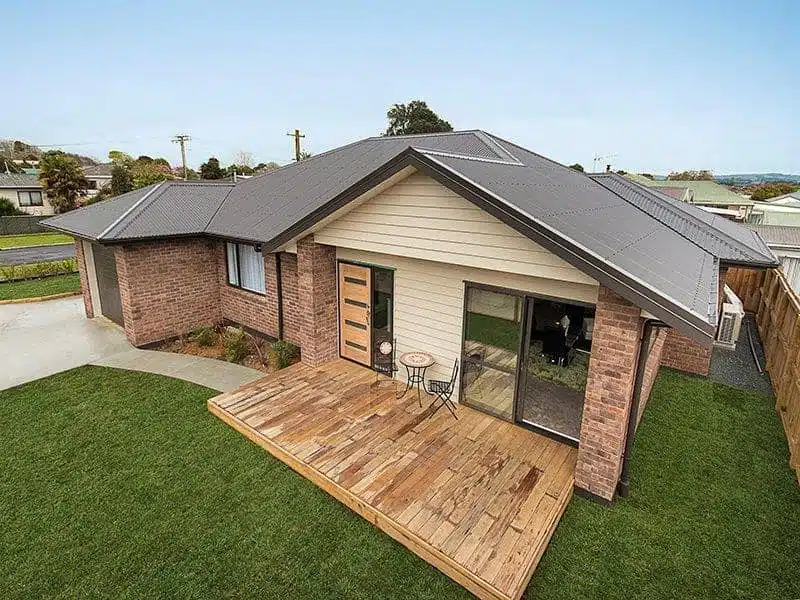
You spend your evenings looking at floor plans online. You spend your weekends driving through new subdivisions. You want to build a custom home in Franklin. You wake up the next morning feeling completely overwhelmed by the entire process. You do not know who to call first. You do not know the project cost. You do not know the timeline.
To start a new house build in Franklin, you must first secure your council property files. You must write a detailed preliminary design brief. You must book a feasibility study before paying an architect for full working drawings.
Most families do this backward. They buy generic floor plans online. They pay a designer to draw a massive house before they understand their site conditions. The builder prices the plans later. The costs blow the budget by hundreds of thousands of dollars. The project stops before breaking ground.
You avoid this stress by following a specific sequence. This guide explains your exact first three steps. You will learn how to stop scope creep from ruining your budget. You will learn the timelines for the local council and construction phases. For a complete roadmap of the entire building journey from land purchase to move-in day, read The Ultimate New Home Guide on our website, which serves as your master checklist.
What Are the First 3 Things I Need Before Calling a Builder?
Before you call a builder to get a price for a project, you need three items. You need a secure site with council property files. You need a written preliminary design brief. You need an expert feasibility study.
If you ask a builder for the cost of a four-bedroom house, they will struggle to give you an honest answer. The price of a house depends heavily on the land underneath. Giving a builder these three items allows them to provide accurate data rather than a wild guess.
Step 1. Secure your land and council property files
You need a physical site before you design a house. A floor plan working perfectly on a flat section in Papakura will fail on a sloping rural block in Clevedon.
Once you own the land, request the council property file. This file contains the rules for your specific section. You must understand these rules before you design anything.
Look for specific overlays and restrictions.
- Does the property have a drainage easement running right through the middle of your ideal building platform?
- Are there specific boundary setbacks you must follow?
- Are you building in a subdivision with strict covenants dictating the allowed cladding types?
You also need to know the soil conditions. Franklin is famous for expanding clay soils and peat. These soil types require specific foundation engineering. A standard concrete slab will fail on unstable ground. You will need a Geotechnical report to tell the engineers how deep to drive the piles. Finding out you need an extra $40,000 in foundation work and retaining walls after you sign a contract causes massive stress. Finding out during step one allows you to budget correctly.
Step 2. Establish your preliminary design brief
A preliminary design brief is a written document explaining how you live. Do not write down room counts only. Writing down four bedrooms and two bathrooms tells a builder almost nothing.
Write down your daily lifestyle requirements. Ask yourself specific questions. Do you have young children requiring a visible playroom from the kitchen? Do you work from home and require an office near the front door to meet clients? Do you play winter sports and require a dedicated mudroom for dirty gear?
When you hand this detailed brief to a custom home builder in Franklin, they understand your vision. They will tell you immediately if your budget aligns with your lifestyle requirements.
Step 3. Book a feasibility study
Do not hire an architect to draw full working drawings yet. Architects design for vision. Builder’s price for reality. If you design a house without a builder assessing the costs, you risk designing a house you are unable to afford. This creates a massive design-budget gap.
Book a feasibility study with a builder first. An expert will walk your site and assess the physical challenges. They look at the slope of the land. They calculate the distance from the road to your building platform to estimate the cost of running power and water lines.
When we assess rural sites for major projects such as our work on Sandspit Road, we evaluate wastewater management. A rural property requires a septic system and water tanks. These items add significant costs missing from the town supply sections. A feasibility study tells you exactly what is physically and legally possible in your section.
How Do I Define My Scope of Work Without Blowing My Budget?
You define your scope of work by separating your structural needs from your luxury wants early in the planning phase.
Scope creep destroys new builds. Scope creep occurs when you start a project with a clear budget but gradually add costly upgrades during the design phase. You look at magazines. You save photos online. You ask the designer to add a custom cedar ceiling and automated lighting. When the final price returns, you panic.
You avoid this by creating a strict spending hierarchy. You must fund the house before you fund the decorations.
The Needs Versus Wants Framework
To stay on budget, sit down with a pen and paper. Divide your building goals into two columns. Label them Needs and Wants.
The Needs Column includes the essentials. You refuse to compromise on these.
- Structural integrity and engineering.
- Site works, retaining walls, and earthworks.
- High-quality, weather-tight cladding.
- Proper insulation and double glazing.
- The correct number of bedrooms for your family.
- Reliable plumbing and electrical systems.
The Wants Column includes the luxuries. You only add these if your budget allows.
- Engineered stone benchtops instead of high-pressure laminate.
- Custom architectural lighting plans instead of standard LED downlights.
- Fully tiled showers instead of acrylic shower liners.
- Hardwood flooring instead of standard carpet and vinyl.
- Ducted central heating instead of a standard heat pump.
The 3 Rules of Scope Definition
Rule 1. Prioritise the structure first. Always spend your money on the bones of the house. You can upgrade your kitchen benchtops when you have more savings. You will struggle to change your foundation once the house is finished.
Rule 2. Secure fixed price building contracts for the essentials. A fixed price gives you certainty. Be highly suspicious of contracts filled with Provisional Sums. A provisional sum is a guess. We limit provisional sums by doing the hard work during the feasibility stage so your price stays firm.
Rule 3. Add the upgrades last. Once you have a fixed price for the essential build, look at your remaining budget. Now you can safely move items from your Wants list to your final scope of work without fear of the bank declining your loan.
How Do I Get Bank Funding For a New Build in Franklin?
You need bank funding to build a house. Banks require certainty before they approve your loan. You face a massive problem during the early planning stages. The bank requires a fixed-price contract to release the funds. You need money to pay an architect for the detailed plans needed to secure a fixed-price contract.
Many families in Pukekohe and Waiuku feel paralysed by this exact situation. You break this cycle using a staged pricing approach. We give you a preliminary budget estimate after you complete your feasibility study and concept plans. Banks use this document to issue a pre-approval. This pre-approval gives you the confidence to invest in full structural engineering and working drawings.
Is Building New Better Than a Relocatable Home?
Families looking for more space often compare building a new house against buying a relocatable home. A relocatable home looks significantly cheaper upfront. You buy a second-hand house for a fraction of the cost of building a new one.
The upfront price hides massive secondary costs. A relocatable home requires transport fees. You pay builders to install new timber piles. You pay drainlayers to connect the house to the septic system. Banks view relocatable homes as high-risk investments. Banks often demand fifty percent equity to fund a relocatable project. Banks happily fund new builds with a ten percent deposit. Old
Franklin villas have expensive issues that require complete rewiring, new plumbing, and extensive insulation upgrades to meet modern building codes. If you want high lending limits and a fixed-price guarantee, building new provides superior financial safety.
Should I Wait to Build or Start the Planning Phase Now?
Start the planning phase now. The design, engineering, and council consent phases take up to six months to complete before a builder breaks ground.
Many families hesitate to call a builder. You watch the news. You listen to economists talk about interest rates. You decide to wait another twelve months to see if borrowing money gets cheaper.
This hesitation creates a massive trap. Waiting a year to build means waiting a year to plan.
When interest rates drop, buyer confidence returns. Thousands of people who waited on the sidelines suddenly decide to build at the exact same time. This creates an instant bottleneck.
Architects get booked out. Council processing times have doubled due to the volume of applications. Good builders fill their schedules for the next two years. Prices for timber and concrete go up due to high demand.
You save a small percentage on your mortgage rate, but you lose money to material inflation and extended wait times. You avoid this trap by starting the planning phase today.
What is the Exact Timeline For a Custom Home Build in Franklin?
A custom home build in Franklin typically takes 10 to 12 months from your first site visit to the day you move in. To reduce your anxiety, you must understand the five precise phases of a new-build timeline.
Phase 1. Feasibility and pre-design take 2 to 4 weeks.
This is the information-gathering stage. We walk your site. We order the Geotechnical reports to test the soil. We review your council property files and discuss your design brief.
Phase 2. Concept Drawings and preliminary estimates take 4 to 8 weeks.
The designer takes your brief and draws the initial floor plans. Once you approve the concept, we price the build. We give you a highly accurate preliminary budget estimate.
Phase 3. Working Drawings and engineering take 6 to 10 weeks.
Structural engineers calculate the load-bearing requirements for the steel and timber. The designer creates detailed plans showing every plumbing pipe and electrical wire.
Phase 4. Council Consent takes 6 to 8 weeks.
The building consent process in Auckland involves strict compliance checks. The council has 20 working days to review the plans. If the council finds an issue, they issue a Request for Information. The 20-day clock stops. This back-and-forth process often pushes the timeline to two months. You read more specific information on consent processing times directly through the Auckland Council Building and Consents website for official guidelines.
Phase 5. Construction takes 20 to 26 weeks.
Once the council issues the building consent, construction begins. A standard single-level home takes roughly five to six months to build. You read more about how we manage these specific construction phases on our Franklin New Home service page to understand our methods.
What Happens Right After I Contact Rag Reno’s?
When you contact Rag Reno’s, we’ll walk you through a structured onboarding process focused on communication and transparency.
We do not fit every buyer. If you want the cheapest possible square-metre rate, we are the wrong choice. We refuse to compromise on structural materials to lower the price. If you want to manage your own sub-trades to save money, our model will frustrate you.
We work with families who want a custom home. We work with clients who demand high communication standards and premium results. John and Sarah McKenzie built our company at Rag Reno’s as a family-owned business to bring authentic building experiences to the Franklin community.
Step 1. The Introductory Call
We call you to have an honest conversation about your goals. We ask about your budget, your timeline, and your location. If we are not the right builder for your specific project, we will tell you immediately.
Step 2. The On-Site Meeting
If we align, we will meet you in person at your site. We look at the slope, the access, and the challenges. We sit down and discuss your needs versus your wants.
Step 3. Concept and Quote Presentation
We present you with a straightforward proposal. We use a software program called Buildertrend. This project management app gives you real-time access to the schedule, the daily site logs, and the budget tracking. You read the full details of our collaborative building process on our How We Work With You page for complete transparency.
Frequently Asked Questions About Starting a New Build in Franklin
Do I need to own land before talking to a builder?
No. Assessing a site before purchase prevents costly mistakes. A builder helps you understand specific site requirements, soil types, and zoning restrictions before you commit to buying a section.
Who handles the council paperwork and building permits?
We manage the entire building consent process in Auckland for you. We submit the engineering and architectural paperwork, answer technical questions from the inspectors, and handle all communication with the local authorities.
Will the final price change during construction?
We use fixed price building contracts to eliminate hidden surprises. The quoted price is the price you pay. The only time the price changes is if you request specific design changes or material upgrades after signing the contract.
Conclusion
Starting a new house build in Franklin requires logic instead of guesswork. You protect your budget and your timeline by completing the early steps in the correct order. Securing your council property files, writing a clear design brief, and separating your structural needs from your luxury wants gives you complete control over your project.
Don’t let information overload paralyse your family. Proper planning stops unnecessary stress. Stop guessing your next move and get absolute clarity on what is possible for your property.
Visit our Contact Us page to book your free early-stage planning session with John today, and map out the exact first steps for your new home.