

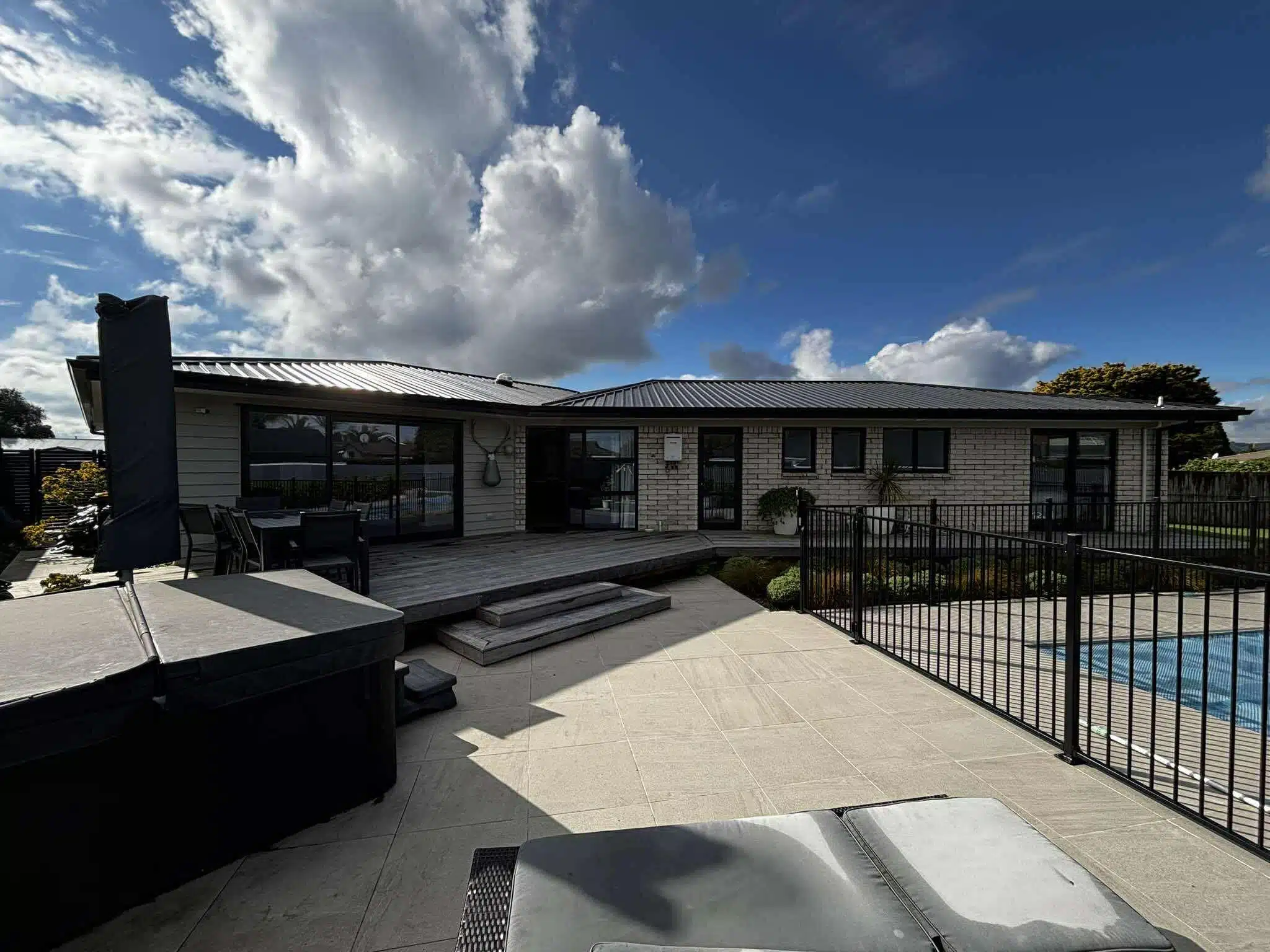
“How do we add the space our family needs without blocking our beautiful backyard view? Will extending our home ruin the natural light we love so much?”
Successful view-preserving home additions rely on three key design approaches: strategic window placement on multiple walls, roof pitch modifications to minimise shadowing, and stepped floor plans that follow natural terrain. Common mistakes homeowners make include extending straight back without angling windows, choosing flat roof designs that block light, and failing to consider seasonal sun patterns.
For Franklin homeowners, extending your home while preserving valued views presents unique challenges. At Rag Reno’s, a family-owned Master Builders business serving the Franklin area since 2011, we’ve helped many families balance their need for additional space while maintaining the outlook that makes their property special. This guide builds on the foundation laid in our comprehensive Home Extension Expert Guide by focusing specifically on maintaining views during the extension process.
What Design Elements Actually Matter for View Preservation in Franklin 2025?
Strategic window placement and orientation make the biggest impact on view preservation. Room positioning relative to existing sight lines is also crucial, followed by roof design that minimises shadowing of existing spaces.
View preservation requires thinking beyond the standard “box on the back” approach. Here’s what matters most:
Key View Preservation Elements
- Window orientation and size: Larger windows positioned at view angles, not just parallel to property lines
- Extension positioning: Offset from direct view lines rather than centred
- Roof design: Pitched or skillion roofs angled away from the view corridors
- Split-level options: Following natural terrain to work with the land
Most Franklin properties have specific view corridors—the exact angles from which you enjoy your best views. In areas like Pukekohe and Bombay, with their elevated positions, these views often significantly contribute to the property’s value. Standard rectangular extensions usually block these corridors. By identifying these key sight lines early in the planning process, your designer can position new spaces to preserve and sometimes even enhance these views.
How Long Should Design Planning Take for View-Preserving Home Additions?
View-preserving design planning typically takes longer than standard extensions. This additional time allows for seasonal sun tracking, multiple design iterations, and 3D modelling to verify view preservation.
The design timeline generally includes these phases:
- Site Analysis
✅ Property boundary and view corridor mapping
✅ Sun path tracking across seasons
✅ Existing structure assessment
✅ View priority identification with clients
- Conceptual Design
✅ Multiple design options development
✅ 3D modelling of view impacts
✅ Initial council compliance check
✅ Client feedback and direction
- Detailed Design
✅ Finalising plans with view preservation strategies
✅ Material and window specifications
✅ Structural engineering integration
✅ Final 3D visualisation from key viewpoints
The additional time invested in planning pays dividends in both construction efficiency and long-term satisfaction. Taking the time to observe how light moves through your property across different seasons, especially during Franklin’s winter months when sun angles are at their lowest, helps avoid creating dark spaces in your existing home.
What's Included in Standard Architectural Plans for View Preservation—and What Isn't?
Standard architectural plans typically include basic elevation drawings, floor plans, and structural considerations, but often exclude detailed 3D view corridor analysis, seasonal sun path studies, and custom window specifications—all of which are helpful for practical view preservation.
What’s Typically Included:
- Basic site plans showing extension footprint
- Standard elevation drawings (2D)
- Floor plans with room layouts
- Structural support details
- Basic window placements
Elements Often Missing:
- 3D modelling from multiple viewpoints
- Seasonal sun path analysis
- View corridor mapping and preservation strategy
- Custom window specifications for optimal views
- Terrain-responsive design adaptations
What to Request in Your Design Brief:
✅ 3D renderings from your primary viewing locations
✅ Seasonal lighting analysis showing winter and summer sun
✅ View corridor preservation strategy
✅ Window specification focused on view maximisation
✅ Integration plan with existing structure and sight lines
❌ Generic window placements
❌ Standard rectangular extension designs
❌ Flat roof structures that block existing views
❌ Plans without consideration of indoor-outdoor flow
❌ Designs that ignore seasonal sun variation
At Rag Reno’s, as a Master Builders member, we collaborate with designers who understand the unique Franklin landscape, from the coastal Clarks Beach to the elevated Bombay Hills, and your specific property views, ensuring these elements are considered.
Should I Build Up or Out When Preserving Views in Franklin Properties?
Building up (by adding a second storey) often preserves ground-level views and yard space, but typically costs more than building out. Building out (ground-level extension) usually costs less but may impact existing views unless carefully angled away from key sight lines.
This decision depends on several key factors specific to your property:
Build Up Considerations:
- Preserves ground-level views and garden space
- Creates potential for new elevated views
- Requires stronger foundations (potential added cost)
- More complex construction process
- May require temporary relocation during construction
Build Out Considerations:
- More affordable construction method
- Easier access during the building process
- Potential to block existing views unless carefully designed
- Reduces garden/outdoor space
- Offers better indoor-outdoor flow opportunities
Decision Matrix: Up vs Out
|
Factor |
Building Up |
Building Out |
Decision Weight |
|
View preservation |
★★★★★ |
★★☆☆☆ |
High |
|
Cost efficiency |
★★☆☆☆ |
★★★★☆ |
Medium |
|
Garden space retention |
★★★★★ |
★★☆☆☆ |
Medium |
|
Construction complexity |
★★☆☆☆ |
★★★★☆ |
Low |
|
Indoor-outdoor flow |
★★☆☆☆ |
★★★★★ |
Medium |
For many Franklin properties, especially those with sloping sections in areas like Pukekohe or precious backyard views in Waiuku, a combination approach often works best—adding some space up and some out, creating a stepped profile that works with the natural terrain while maximising both space and views.
According to research published by the Royal Institute of British Architects (RIBA), thoughtfully designed home extensions that prioritise natural light and preserve views can increase property values by up to 20% while significantly improving occupants’ well-being through better connection with outdoor spaces.
What Space-Maximising Designs Work Best for Small Franklin Properties?
Multi-functional spaces with built-in storage, open-plan layouts with defined zones, and indoor-outdoor transitional areas deliver the most functional space on small Franklin properties while maintaining views through strategic window placement.
Most Effective Space-Maximising Approaches:
- Open Plan with Visual Anchors
✅ Removes unnecessary walls to create flow
✅ Uses furniture and subtle level changes to define areas
✅ Maintains sight lines through the entire space
✅ Allows views to extend from multiple positions
- Indoor-Outdoor Integration
✅ Large sliding or bifold doors extending the living space outward
✅ Covered outdoor areas as functional room extensions
✅ Consistent flooring materials create visual continuity
✅ Strategic landscaping framing rather than blocking views
- Vertical Space Utilisation
✅ Higher ceilings with clerestory windows above eye level
✅ Built-in storage maximising wall space
✅ Loft areas for occasional use spaces
✅ Varied ceiling heights create visual interest without walls
The combination of these approaches allows even modest-sized extensions to feel spacious while preserving your important views. The key lies in thinking beyond simple square footage to consider how space functions and flows throughout your home, a principle we emphasise in our family-oriented approach to building.
What Council and Construction Considerations Matter Most for View-Preserving Extensions?
Franklin Council approvals for unique view-preserving designs have their own timeline, with neighbour consultation often required when views across property boundaries are involved. Selecting builders experienced in precision window installation and structural modifications adds value to view-focused projects.
Key Council Considerations:
- Height restrictions may limit second-storey options
- Boundary setbacks affect positioning relative to view corridors
- Resource consent needs for non-standard designs
- Neighbour consultation when shared views are affected
- Franklin District Plan specific requirements for hill areas
Critical Construction Elements:
- Precision window installation with on-site adjustments
- Structural modifications for larger openings
- Custom glass specifications for clarity and performance
- Exact roof pitch execution to planned angles
What to Verify in Your Builder Quote:
✅ Specific window brands and models specified
✅ Glass type and performance ratings detailed
✅ Precise window placement measurements included
✅ Support structures for larger openings specified
✅ Allowances for on-site adjustments during installation
❌ Generic “windows as per plan” wording
❌ Standard glass packages without specifications
❌ No mention of precise positioning requirements
❌ Missing details about indoor-outdoor transitions
❌ Lack of contingency for view optimisation
Home Extensions at Rag Reno’s ensures that your extension plans translate into reality without compromising your property’s views.
Planning Checklist for View-Preserving Home Extensions (Print This)
Pre-Design Phase:
□ Identify and photograph primary views to preserve
□ Document sun patterns across different seasons
□ List priorities (view vs. space vs. budget)
□ Research council requirements for your property
□ Collect inspiration images of similar solutions
Designer Selection:
□ Verify experience with view-preserving designs
□ Check portfolio for similar projects
□ Confirm 3D modelling capabilities
□ Ask about the view corridor preservation approach
□ Discuss timeline for seasonal considerations
Design Development:
□ Request multiple design options
□ View 3D models from key viewpoints in your home
□ Check winter and summer sun impacts
□ Verify window specifications and placements
□ Consider indoor-outdoor connection options
Builder Selection:
□ Verify Master Builders membership and guarantees
□ Check experience with custom window installations
□ Confirm understanding of precise placement requirements
□ Discuss process for on-site adjustments
□ Review examples of previous view-focused work
Construction Preparation:
□ Mark and verify view corridors on site
□ Confirm window orders and specifications
□ Schedule precision placement verifications
□ Plan for protection of existing view features
□ Create a contingency plan for discoveries during construction
Representative Example: View-Preserving Home Addition
Example Approach: Preserving Hills Views in Franklin
Property Profile: A single-storey home on a sloped section with western views toward rolling hills
Extension Requirement: Additional space, including master bedroom, ensuite, and
family room, without losing hill views from existing living areas
Design Challenge: Standard rectangular extension would block the afternoon sun and primary views from the main living area
Solution Approach:
- L-shaped addition wrapping around the northern corner
- Floor-to-ceiling corner windows in the new family room
- Raised ceiling with clerestory windows allowing light to existing spaces
- Skillion roof sloping away from the view corridors
- Stepped foundation following natural terrain
Key Design Elements:
- Rotation of extension from the property boundary to preserve the view angles
- Elevation change between the original home and the extension
- Corner window system without central support
- Extended eave design to manage summer sun while preserving winter solar gain
Potential Outcomes:
- Preservation of primary hill views
- Increased natural light to existing spaces
- New views created from the master bedroom
- Improved indoor-outdoor flow with stepped deck system
This approach demonstrates how thoughtful design can preserve valuable views while adding substantial living space to your Franklin home, whether you reside in Pukekohe, Waiuku, or Clarks Beach.
FAQs About View-Preserving Home Extensions
Will extending my home always affect my existing views?
No. With proper design strategies, including angled walls, strategic window placement, and careful positioning, extensions can preserve and sometimes even enhance your existing views. Standard rectangular extensions are more likely to block views, while custom designs that specifically address view preservation often achieve better results.
How does view-preserving design affect the cost compared to standard extensions?
View-preserving design elements may add to your total project cost. This can include more complex roof structures, premium window systems, and custom positioning. However, this investment often protects your property’s value, as homes with preserved views typically maintain higher market appeal.
Can I still have open-plan spaces while preserving specific view lines?
Yes. Open-plan spaces actually enhance view preservation by allowing sight lines to extend through multiple areas. The key is strategic furniture placement and subtle dividing elements like level changes or partial walls that don’t interrupt the primary view corridors while still defining functional zones.
Will the council restrict my design options for view preservation?
Franklin Council evaluates each application individually. Height restrictions and boundary setbacks remain important considerations, but pre-application meetings can identify workable approaches. Resource consent applications that clearly demonstrate consideration of neighbourhood impact are more likely to be viewed favourably.
Conclusion
Maintaining your cherished backyard views while adding much-needed space represents one of the most valuable investments you can make in your Franklin home. The difference between thoughtfully designed extensions and standard additions isn’t just aesthetic—it directly impacts your daily living experience and long-term property value.
Throughout this guide, we’ve explored how strategic window placement, thoughtful orientation, and custom design elements enable you to expand your living space without compromising the natural beauty that drew you to your property. The key lies in addressing these design challenges early in the planning process with experienced professionals who understand both architectural principles and the unique Franklin landscape.
Your home should grow with your family while preserving what makes it special. The views you enjoy today can remain part of your expanded home tomorrow with the right approach and expertise. Contact us today for a no-obligation consultation and discover how our Franklin-focused Master Builders business can help you add space while preserving your property’s most valuable views.